
Randle, Michael
Michael Randle
Michael Randle

The spectacle of thousands of predominantly young people taking to streets in nonviolent protest against the threat of climate catastrophe is reminiscent of the mass demonstrations and sit-downs of the anti-nuclear Committee of 100 in the 1960s.
Like Extinction Rebellion (XR), the Committee – as indeed the broader anti-nuclear movement – was a response to an existential threat to civilisation, possibly even to human survival.
Like XR, the Committee was committed to using mass…
David McReynolds, who died in New York at the age of 88 on 17 August, played a leading role in the US and international peace movement. He was one of the main organisers of the anti-Vietnam war mobilisation in the US, which not only contributed to the ending of that war but had a profound impact on US politics and society. He was also prominent in the anti-nuclear campaign both in the US and internationally, and, though not a gay…
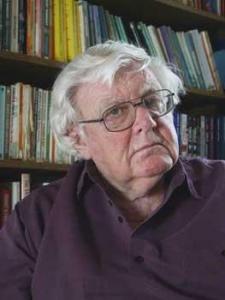
Albert Hunt, critic, playwright and educator, and former staff member and drama critic of Peace News, was part of the wave of innovators that transformed the British theatrical scene in the 1960s and 1970s and pioneered an approach to adult education based on the active participation of students in games and creative improvisation.
Born in Burnley in 1928 to a working-class Pentecostal family, with a radical pacifist tradition, he was a conscientious objector to military…
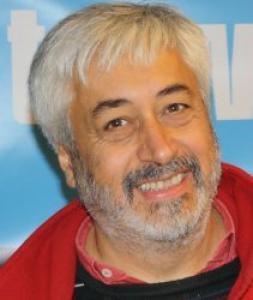
Howard's sudden death has left us shocked and bereaved, and with an irrational sense of outrage that he has left us so unexpectedly. He was only 63 and in the middle of helping organise next summer’s WRI conference in South Africa. He leaves a gap which others must strive to fill. It will be difficult, and the following overview and appreciation of his life as a peace activist, organiser and researcher will give some indication of the scale of the challenge.
But before reviewing his…
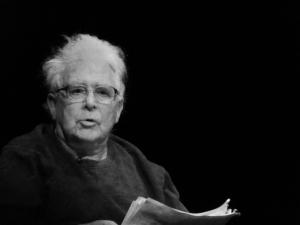
John Arden at an 80th birthday tribute in 2010.
John Arden, who died on 28 March at the age of 81, was one of that generation of dramatists, novelists, film-makers and critics who transformed cultural life in Britain in the late 1950s and 1960s. They included, among others, fellow dramatists John Osborne, Shelagh Delaney, Harold Pinter, Arnold Wesker and Brendan Behan; the theatre directors Joan Littlewood and William Gaskill; poets such as Christopher Logue…
This is an important new book on a topic that could hardly have greater political relevance or urgency.
Its author, April Carter, comes from a background of nonviolent activism and has established herself as a leading academic specialist in this field and in the broader arena of political philosophy. She examines ‘people power’ with dispassionate thoroughness, taking account of the conceptual ambiguities in the term itself and theoretical and practical issues related to its…
Two new books have appeared that are essential reading for anyone interested in understanding how collective nonviolent action – civil resistance – can operate at a strategic level to further social and political emancipation.
The contributions in Howard Clark’s collection, People Power: Unarmed Resistance and Global Solidarity, look at the varied forms transnational solidarity can take – and the pitfalls it has to avoid.
In Civil Resistance and Power Politics: the…
This book is a must for anyone interested in deepening his or her understanding of civil (nonviolent) resistance both in general and in the particular context of the first Palestinian Intifada.
That Intifada – literally “shaking off” – began in response to the death in December 1987 of four Palestinians at an Israeli checkpoint. However, as Mary King shows in this meticulously researched study, the groundwork was laid by the development of civil society organisations, including…
Reverend Michael Scott, once an iconic figure in the campaigns for racial justice, colonial freedom and nuclear disarmament, is now largely forgotten. Anne Yates and Lewis Chester's The Troublemaker: Michael Scott and his Lonely Struggle Against Injustice, should go some way to ending the neglect of this quiet, introspective yet determined pioneer of nonviolent direct action.
Born into a clerical family in Sussex in 1907, Scott was ordained in Britain as an Anglican priest in 1930…
Devi Prasad's history of War Resisters' International covers the first fifty-plus years of its existence from 1921 to 1973-4.
Based on the records of statements from its Council and Executive and the proceedings and resolutions of its International Triennial Conferences and Study conferences, the book traces its development from an essentially anti-militarist and anti-conscription organisation to one with the broader agenda of promoting nonviolent direct action on a range of issues,…
Is there a nonviolent alternative to military intervention in those situations which cry out for some kind of international response? In Bosnia, for example, or Kosova,or Rwanda? This is the main challenge which has led to recurrent attempts to undertake cross-border interventions and to establish a permanent peace brigade or “peace army”.
The attempts to date have met with varying degrees of success depending in part on the kind of situation being confronted and the methods adopted…